Senior Capstone:
Aerodynamic Device to Improve Tractor/Trailer Rear Bogie Flow

I designed and built an aerodynamic device to improve tractor trailer efficiency and reduce costs for trucking companies.
Within my team, I owned the primary design and CFD analysis, and contributed to the structural analysis, fabrication, and presentations.
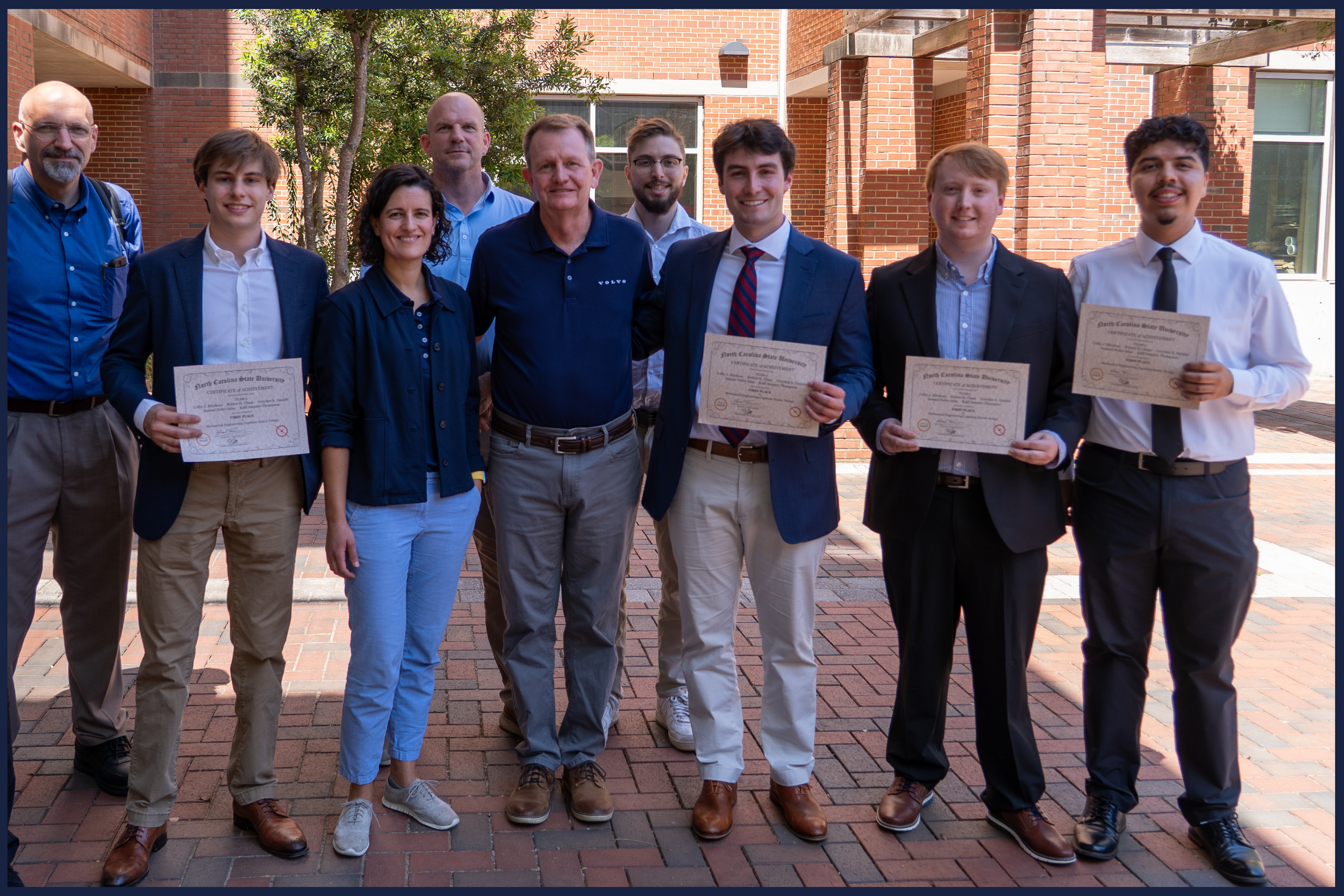
As a result of our hard work, we were awarded 1st place for our design on Senior Design Day.
Problem Statement & Constraints
To design and build an aerodynamic device which affixes around the tractor trailer rear bogie wheels and reduces drag without infringing on existing patents, in order to reduce fuel costs by shipping companies and truck owners.
Constraints:
Stay within $1000.00 budget
Do not infringe on any patents, particularly ones held by FlowBelow
The device cannot interfere with the operation of the tractor trailer
The device must weigh less than or equal to 65 lbs per side
The material used must be able withstand temperatures as high as 200 degrees Fahrenheit
The device must withstand vibrations experienced by the truck up to 100 mph
The device must increase efficiency by at least 2.3%
Experience
Over the course of my senior year, my team and I designed, analyzed, and successfully built a working full scale solution. We utilized software including SolidWorks, Ansys, MATLAB, and Microsoft Excel, as well as engineering design techniques such as Pugh decision matrices, Gantt charts, feasibility studies, and engineering economic analysis, and finally fabricated using mills, lathes, welding, and other shop tools.
My primary responsibilities during this project were design and CFD. I led the design in SolidWorks as the primary designer, drafting initial prototypes and constantly making quick revisions. I was also in charge of the Computational Fluid Dynamics analysis using Ansys Fluent, building a dummy truck model to accurately simulate fluid flow across the entire vehicle and create a reliable control case. Across multiple simulations at varying velocities, we saw an increase in efficiency between 2.5% and 8%, easily exceeding our performance goals. I was also responsible for the statistical analysis of our structural simulation results, which I performed using MATLAB.
Aside from the technical experience, this project taught me how to work on a team, remain accountable, and take feedback from stakeholders.
Gallery
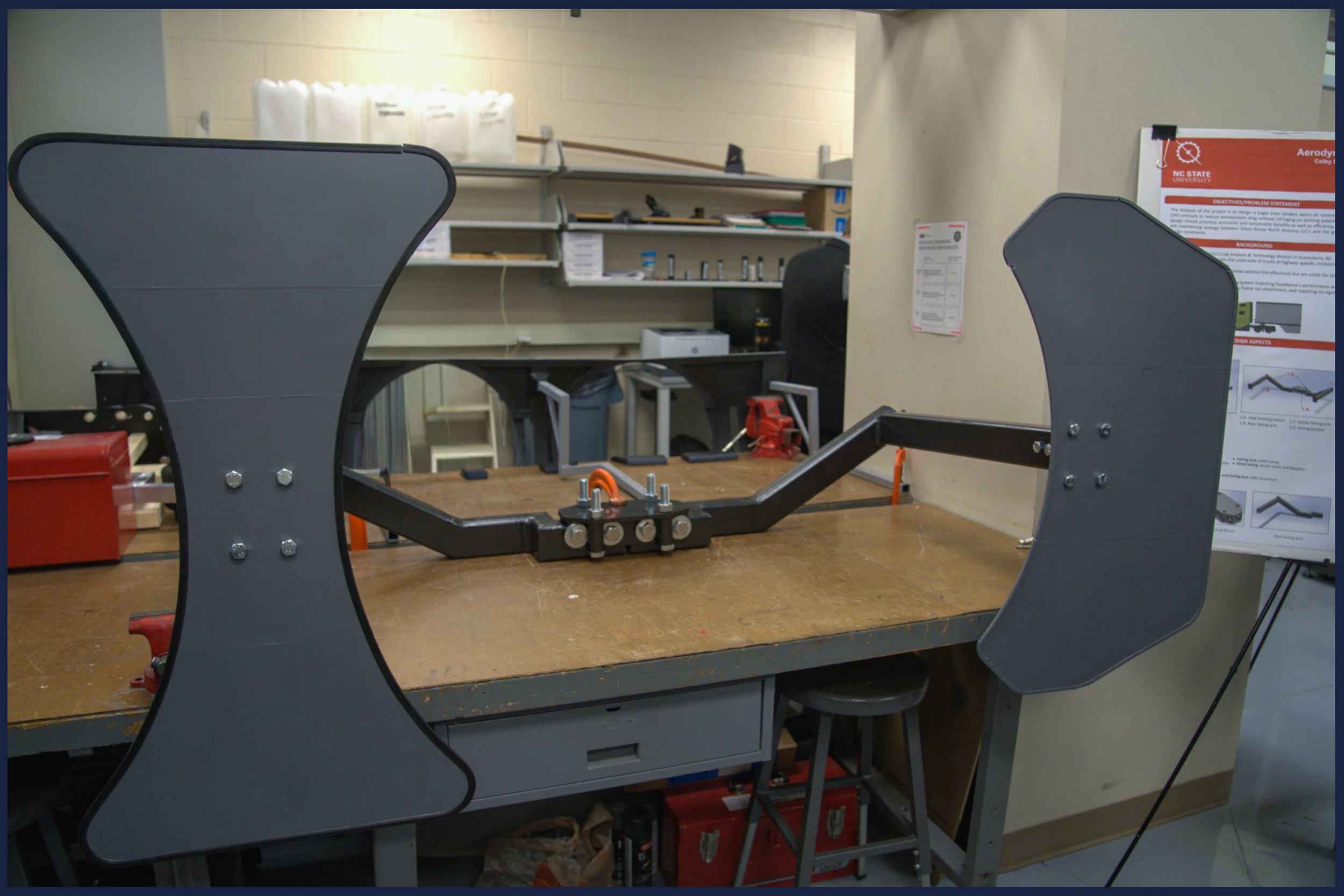
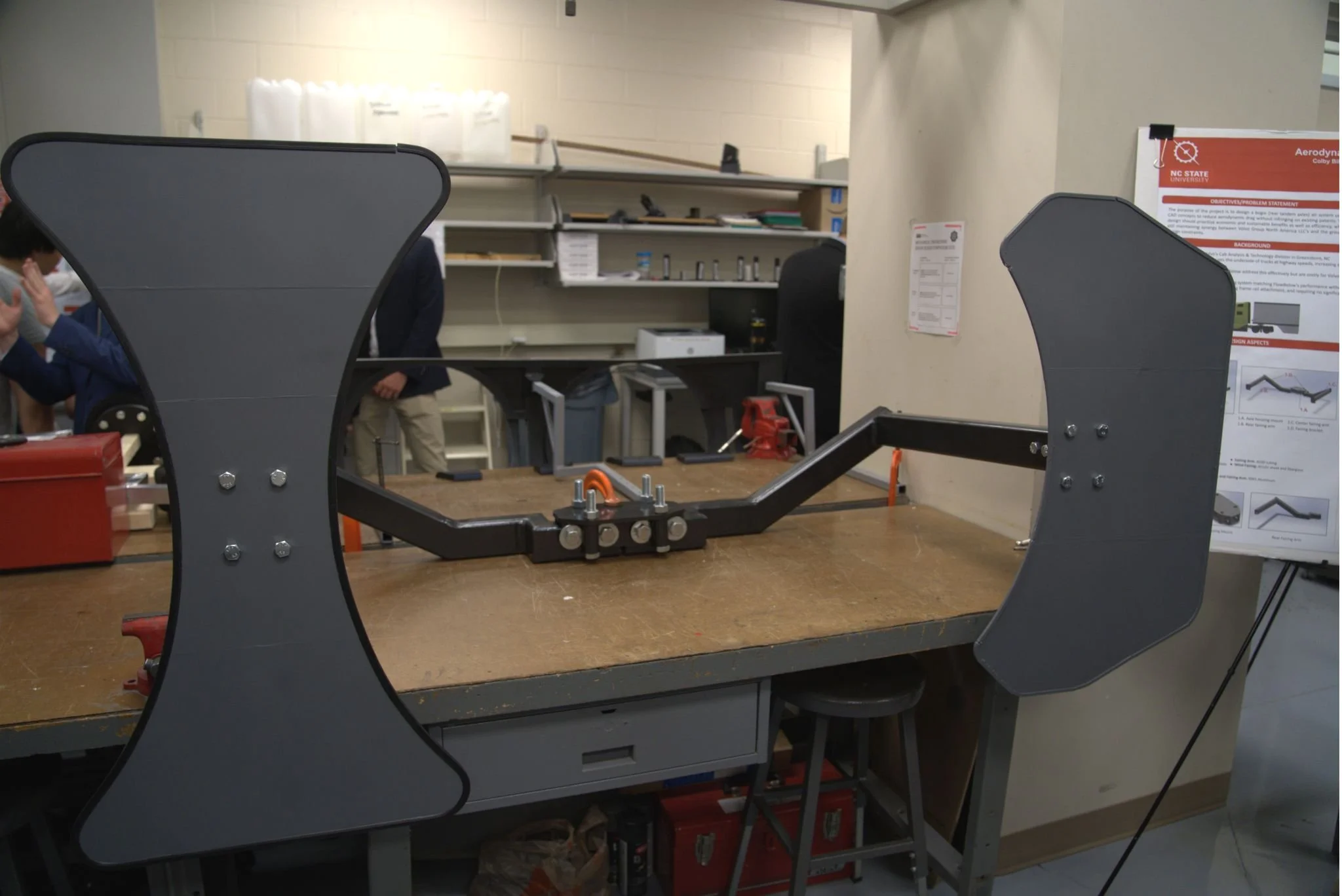
Full scale prototype on Senior Design Presentation Day.
Our full scale prototype was constructed out of steel and acrylic due to their low cost, although our proposed design would be manufactured out of aluminum and fiberglass.
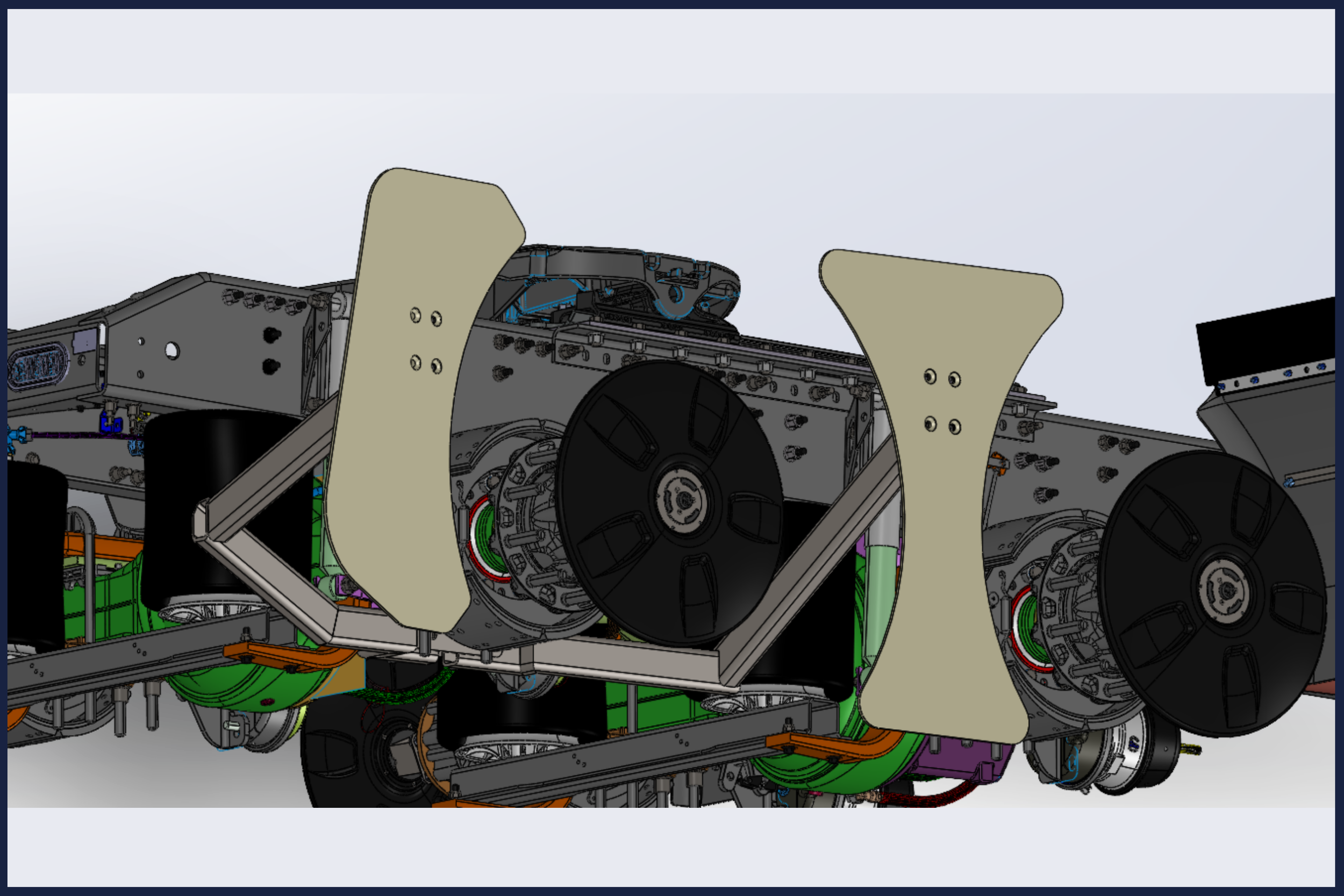
Design Stage: Rendering of early prototype assembled onto Volvo truck suspension in SolidWorks.
Later iterations were fully symmetrical, so that a single wind fairing kit could be fitted onto either side of the truck, reducing tooling cost by half.
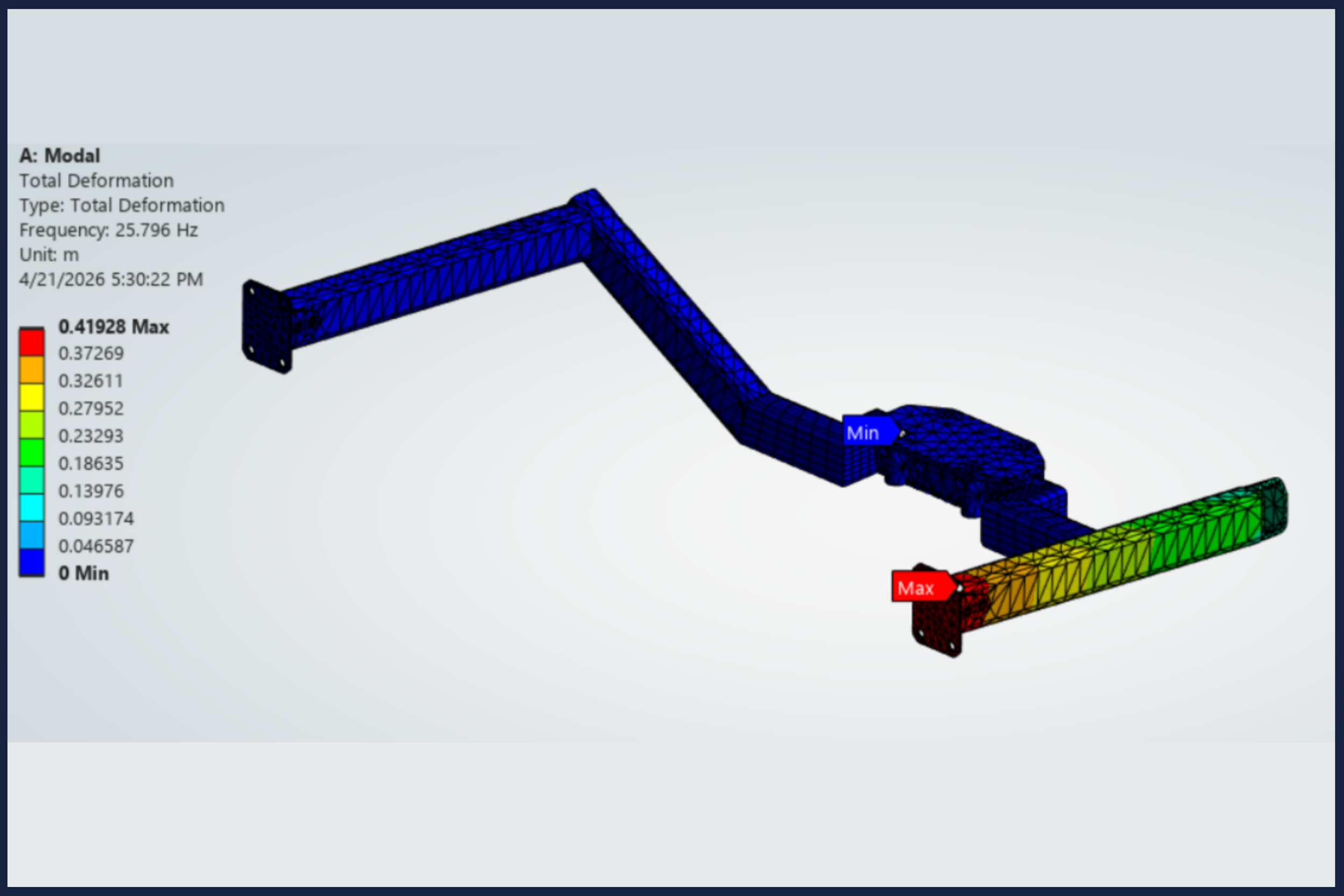
Analysis Stage: Modal analysis of wind fairing arms in Ansys.
Our main structural goal was to achieve a lowest global modal frequency of at least 20 Hz.
We performed additional Von Mises structural simulations with applied pressure loads to ensure static strength.
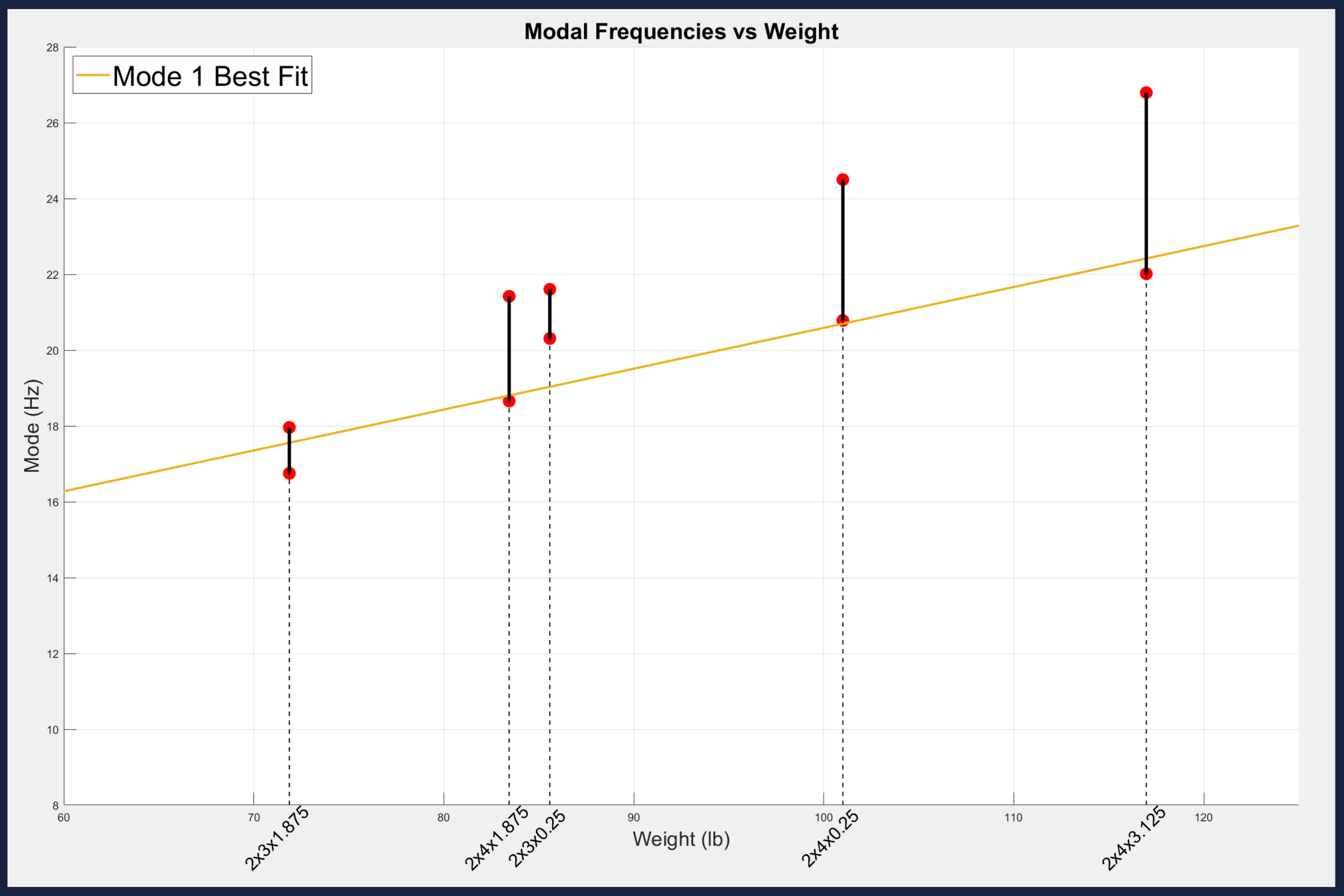
Analysis Stage: Results of modal analysis displayed in MATLAB.
Statistical analysis was conducted using MATLAB to determine the optimal tubing size which meets our design constraints.
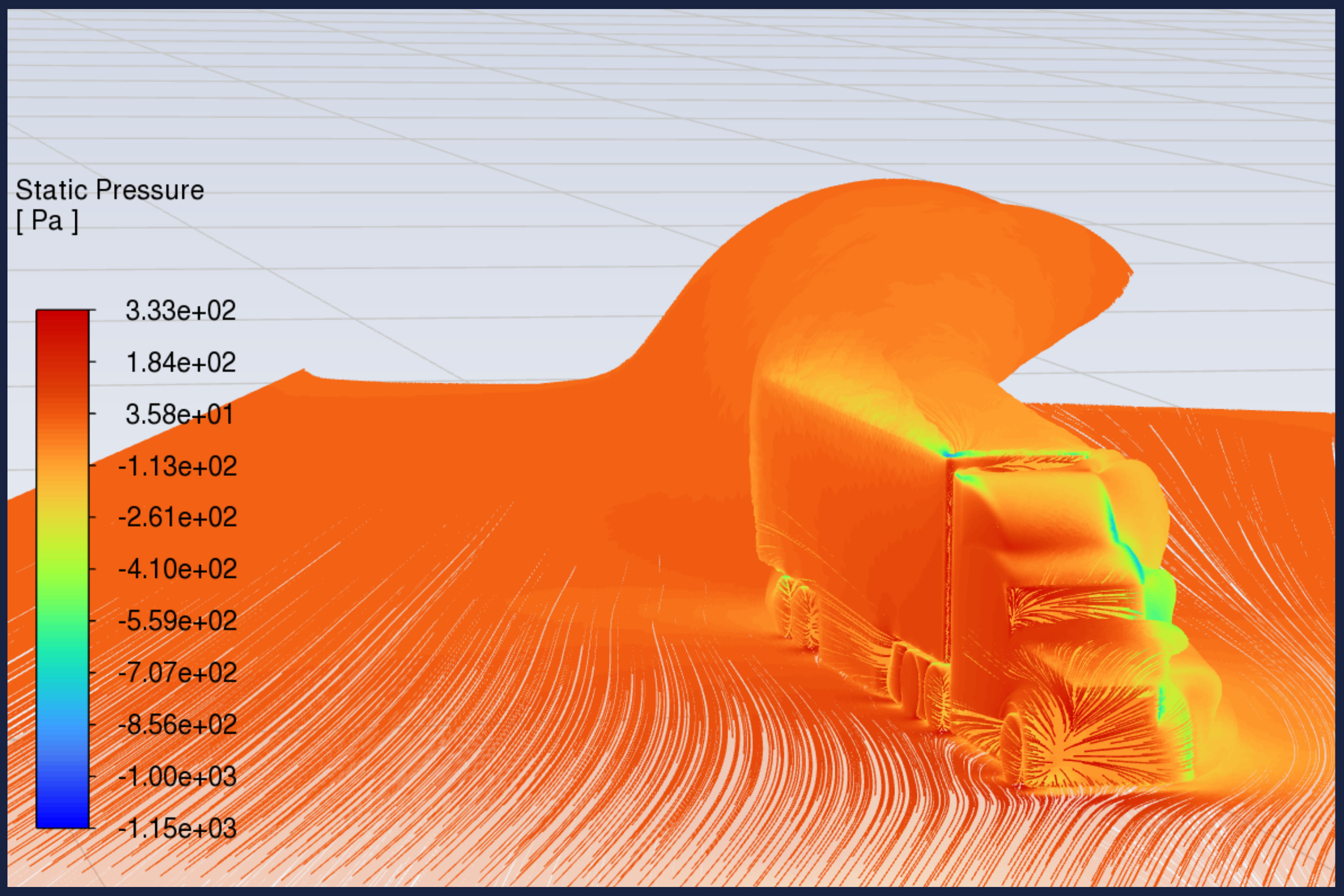
Analysis Stage: CFD simulation of our design implemented onto a mock semi-truck in ANSYS Fluent.
Coefficient of drag was solved for to determine the increase in aerodynamic efficiency.
Our design resulted in a 2.5% - 8% increase in efficiency.
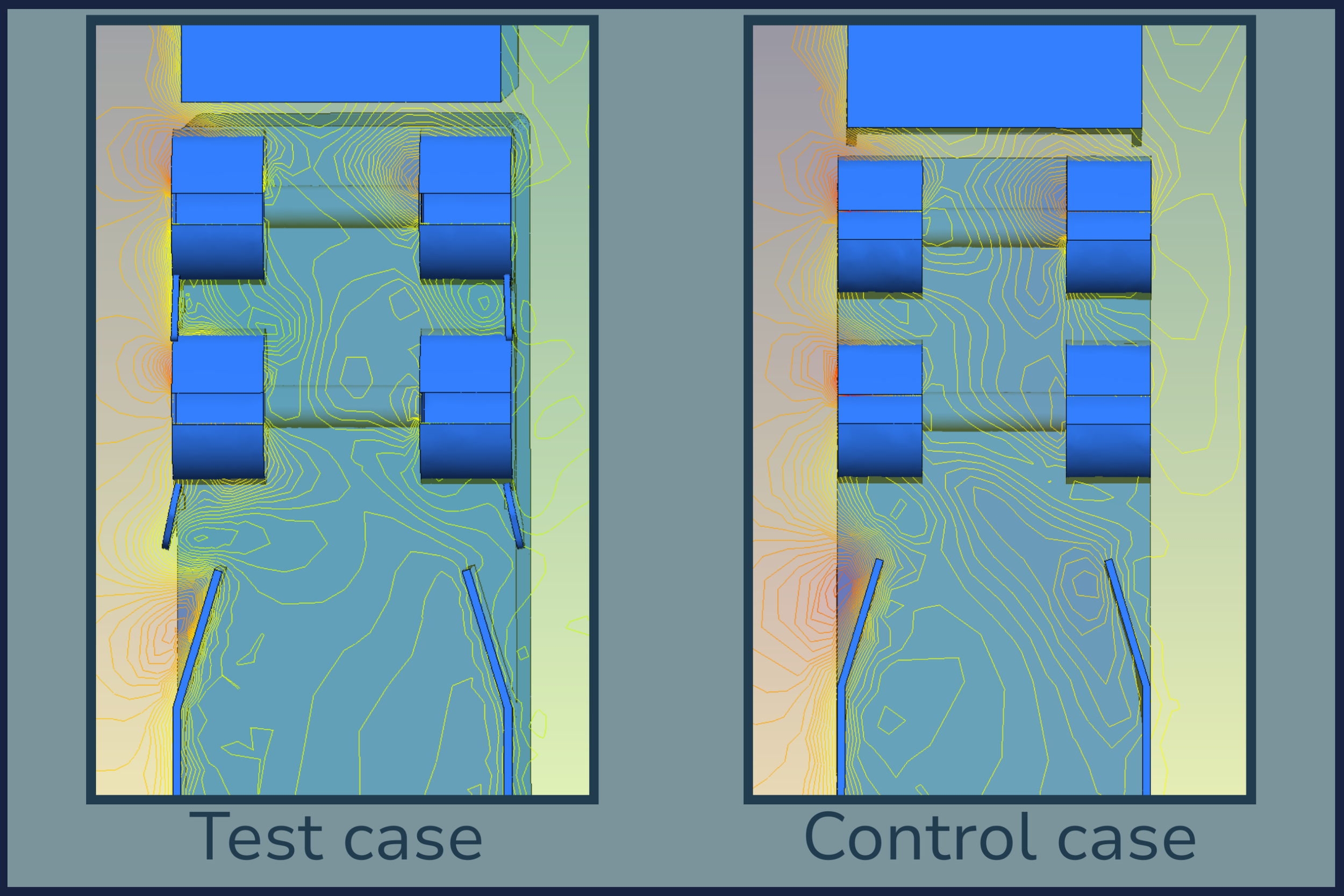
Analysis Stage: Rendering of pressure isolines on our design compared to a control case in Ansys Fluent.
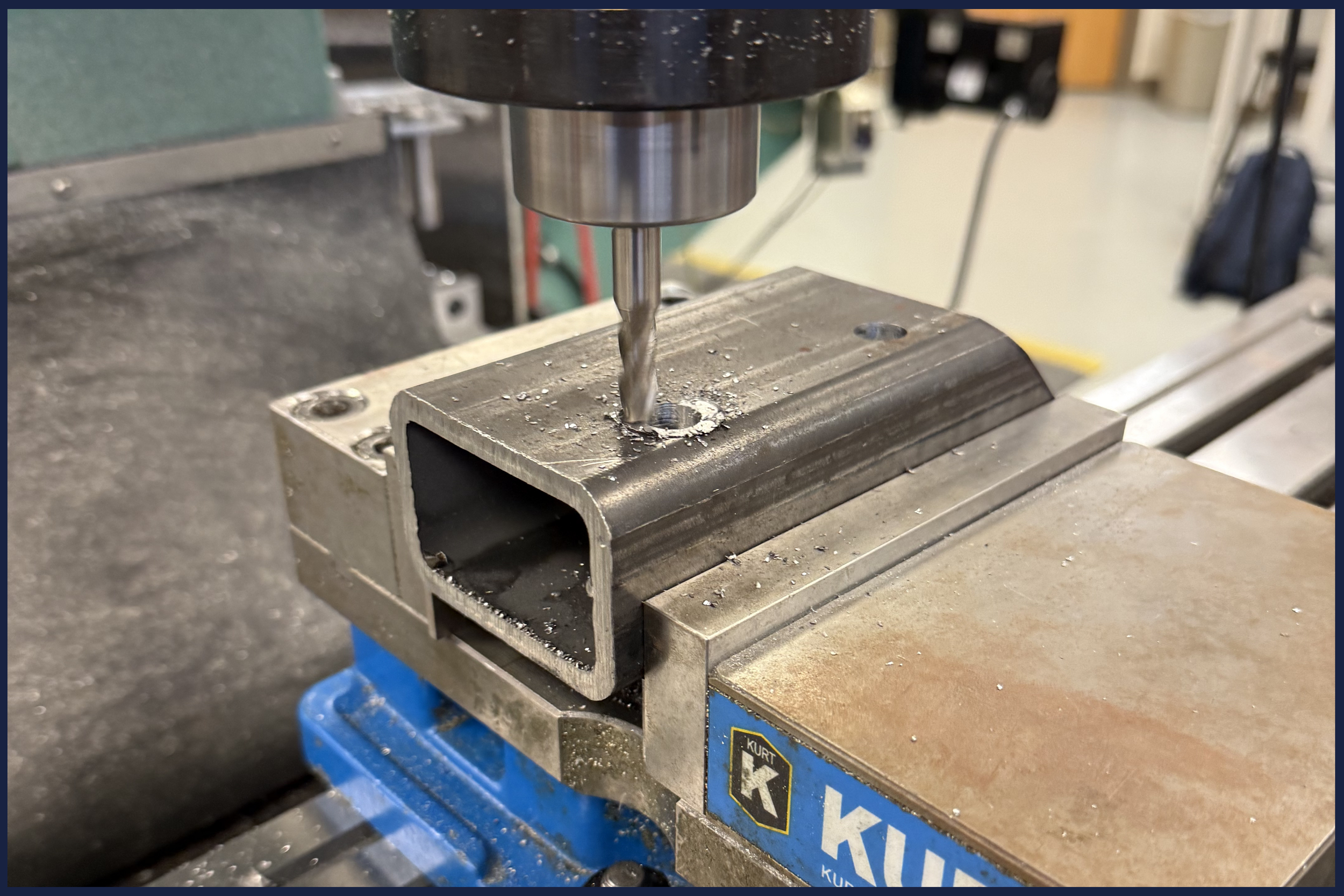
Manufacturing Stage: Boring out holes on a part using mill.
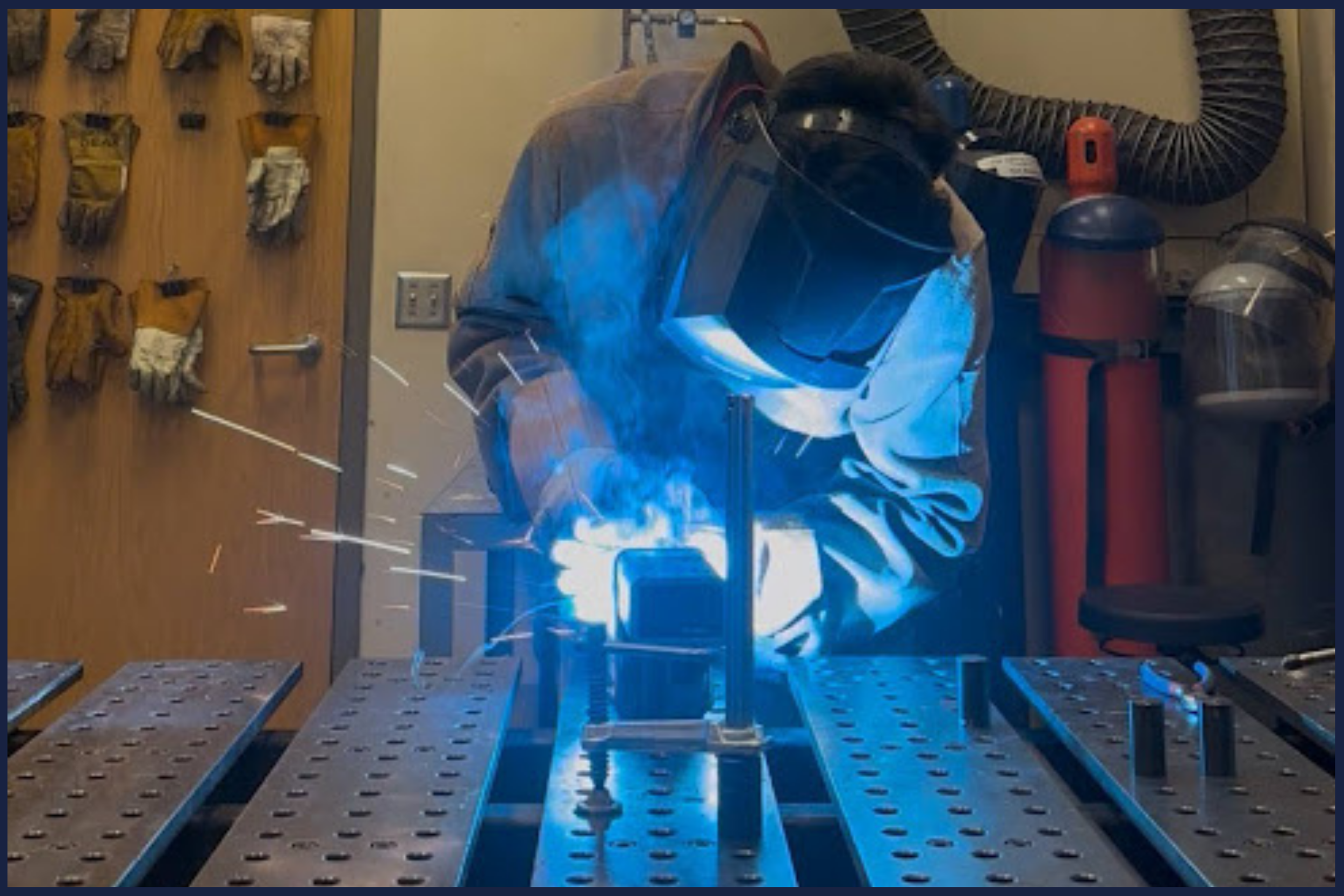
Manufacturing Stage: MIG welding steel parts.
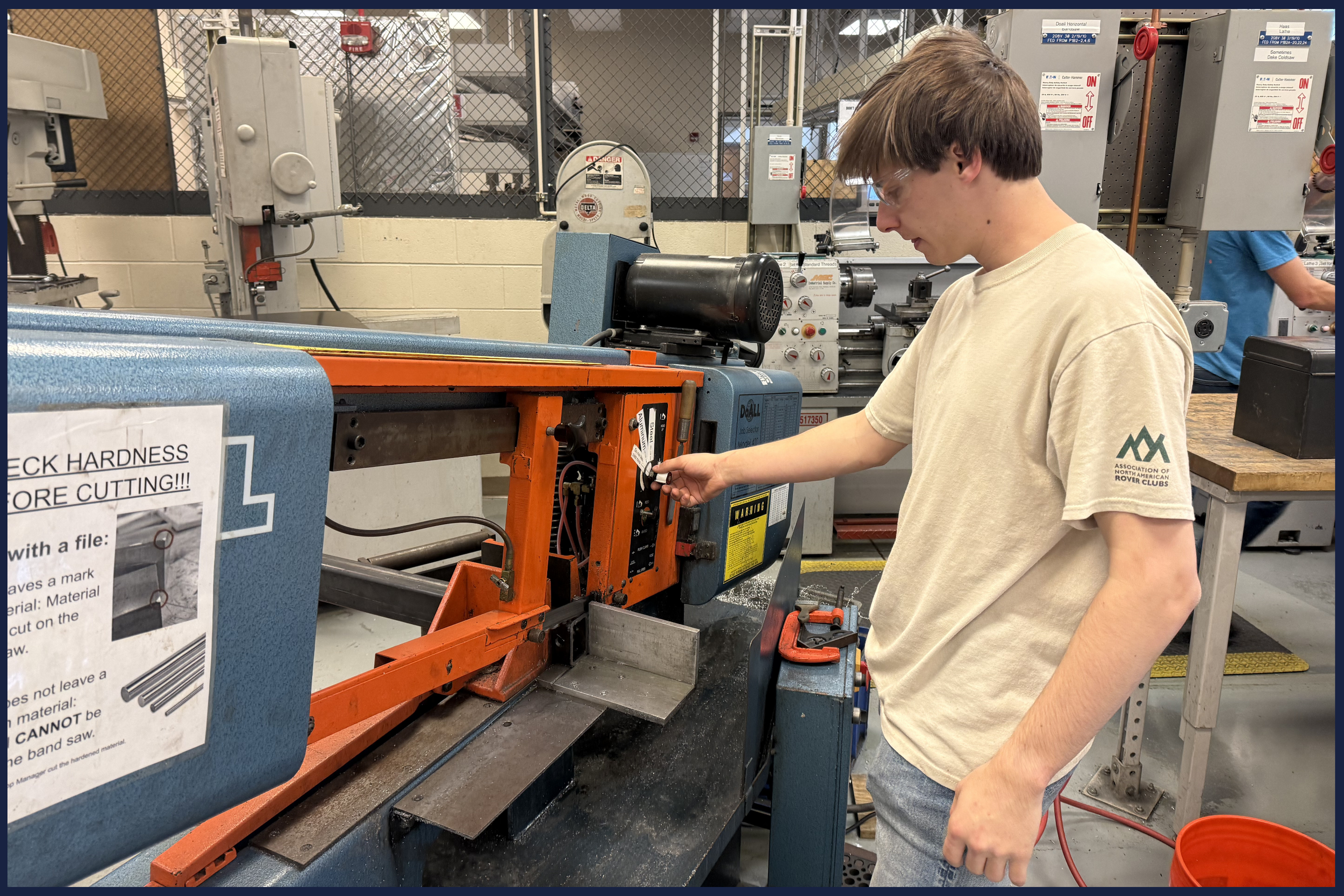
Manufacturing Stage: Cutting parts on the horizontal bandsaw.
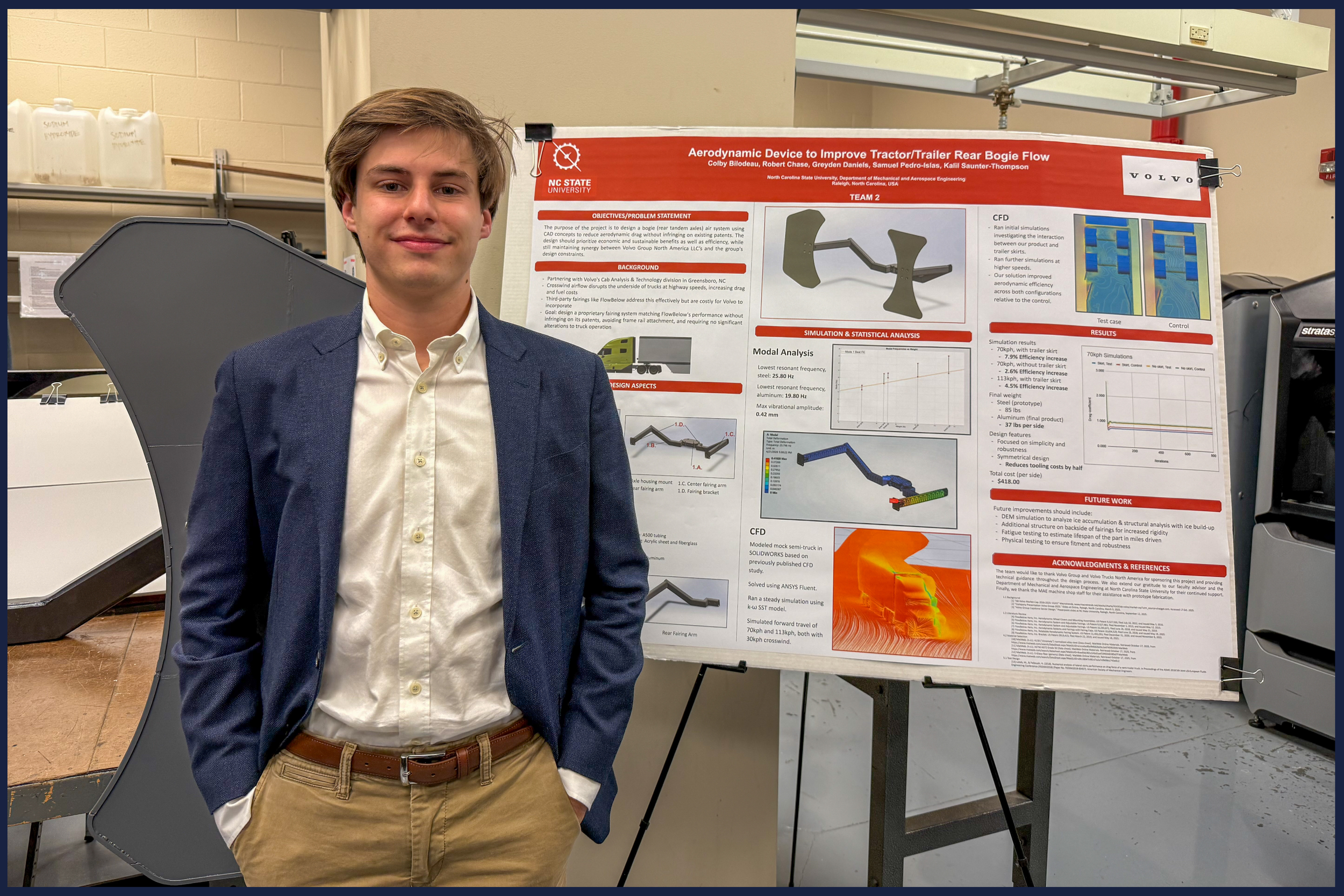
Presentation: Presenting our final design at Senior Design Day.