MOSAIC:
Modular Ocean System for Integrated Autonomy and Control
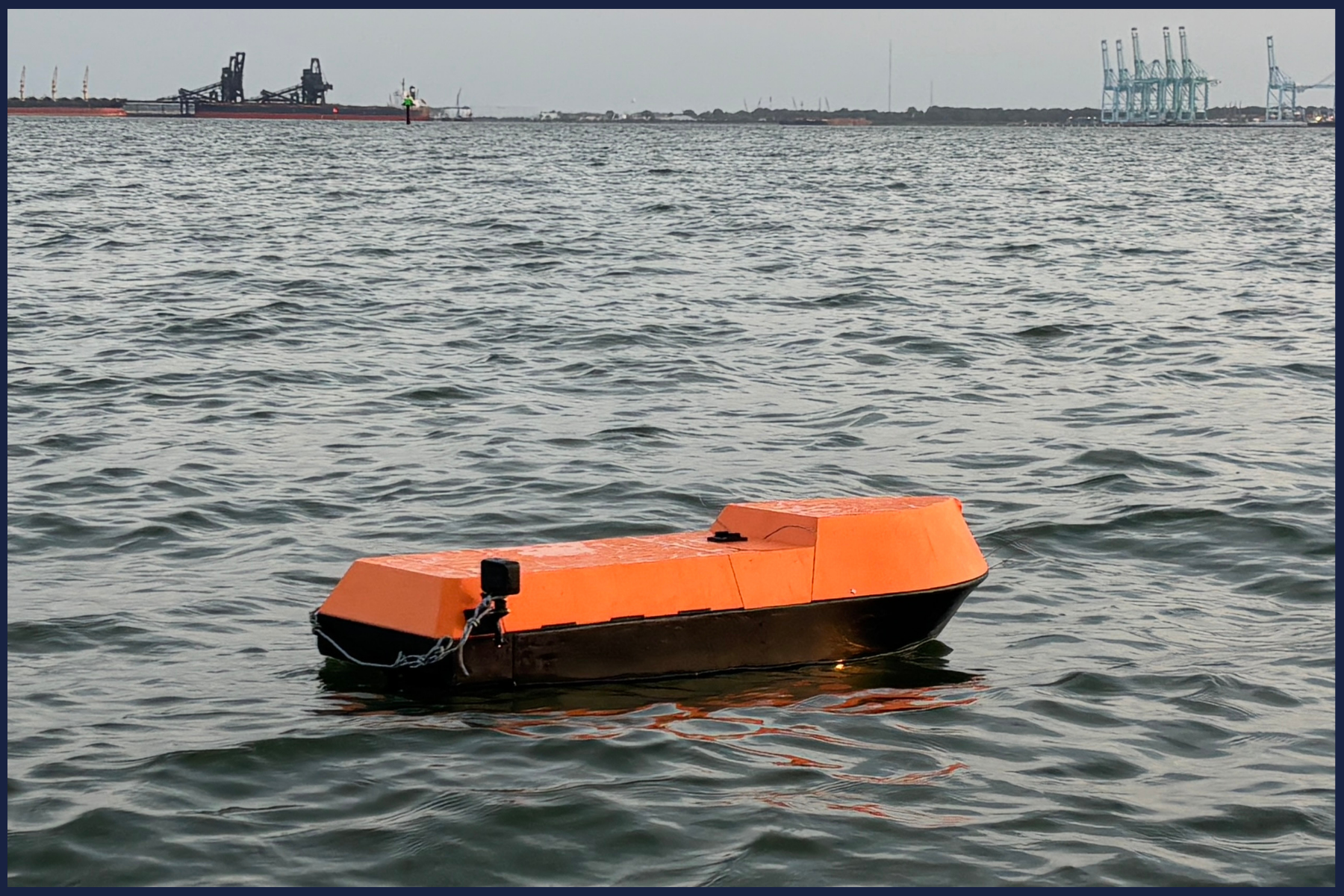
MOSAIC is an unmanned surface vessel designed and built by Seaborne Systems for offshore infrastructure inspection and maritime defense missions.
She is designed to carry a small UAV which can launch and land autonomously with the use of AprilTags and custom recovery hardware.
Even though she is only 4 feet long, she can cruise at up to 12 kts and is built for big seas.
Experience
Beginning in early 2026, my college roommate and I embarked on an ambitious project: building a USV and UAV which can collaborate and carry out fully autonomous missions together. The workload was simple: he was responsible for the drone, and I was responsible for the boat.
So over the course of my final semester, I worked extensively designing a USV from scratch. Using what I know from my considerable maritime experience and by learning naval architecture principles on the fly, I modeled a hull in SolidWorks, simulated it in Ansys, and ran calculations in MATLAB to build a propulsion stack, all during the first month. After several hull iterations, I began building the entire hull using 3D printers and fiberglass layups while still continuing to design nearly 200 additional components to outfit the rest of the boat.
Now, about 6 months later, our USV MOSAIC is fully operational, having carried out several successful sea trials and reaching speeds up to 12 knots. Although she is fully uncrewed, we are still working on integrating the autonomy stack. The drone is fully operational as well, with an on board camera and Raspberry Pi integrated and autonomy in the works.
This undertaking has given me experience taking a project from cradle to grave; designing parts from scratch, simulating them to guess how they’ll fail, building them to realize how they actually fail, and then doing then process all over again until it works. It has also given me the chance to exercise countless skills, from CAD to Computational Fluid Dynamics and naval architecture to fiberglass layups and soldering wiring harness to finally seeing the boat move under her own power, this project has had it all and it’s been incredibly gratifying.
And it’s still in progress! Check out seaborne-systems.com for updates.
Gallery
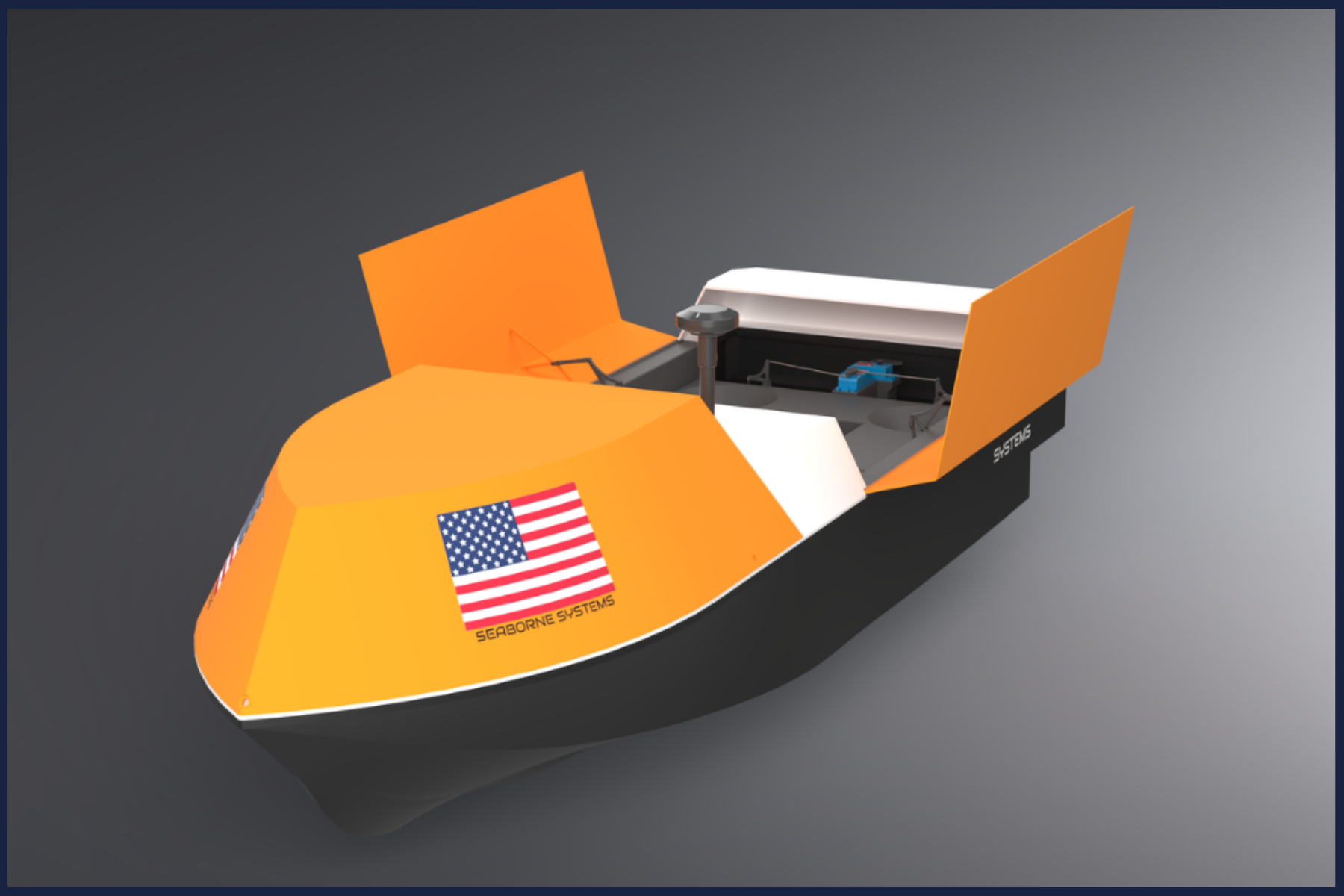
Rendering of MOSAIC in Solidworks.
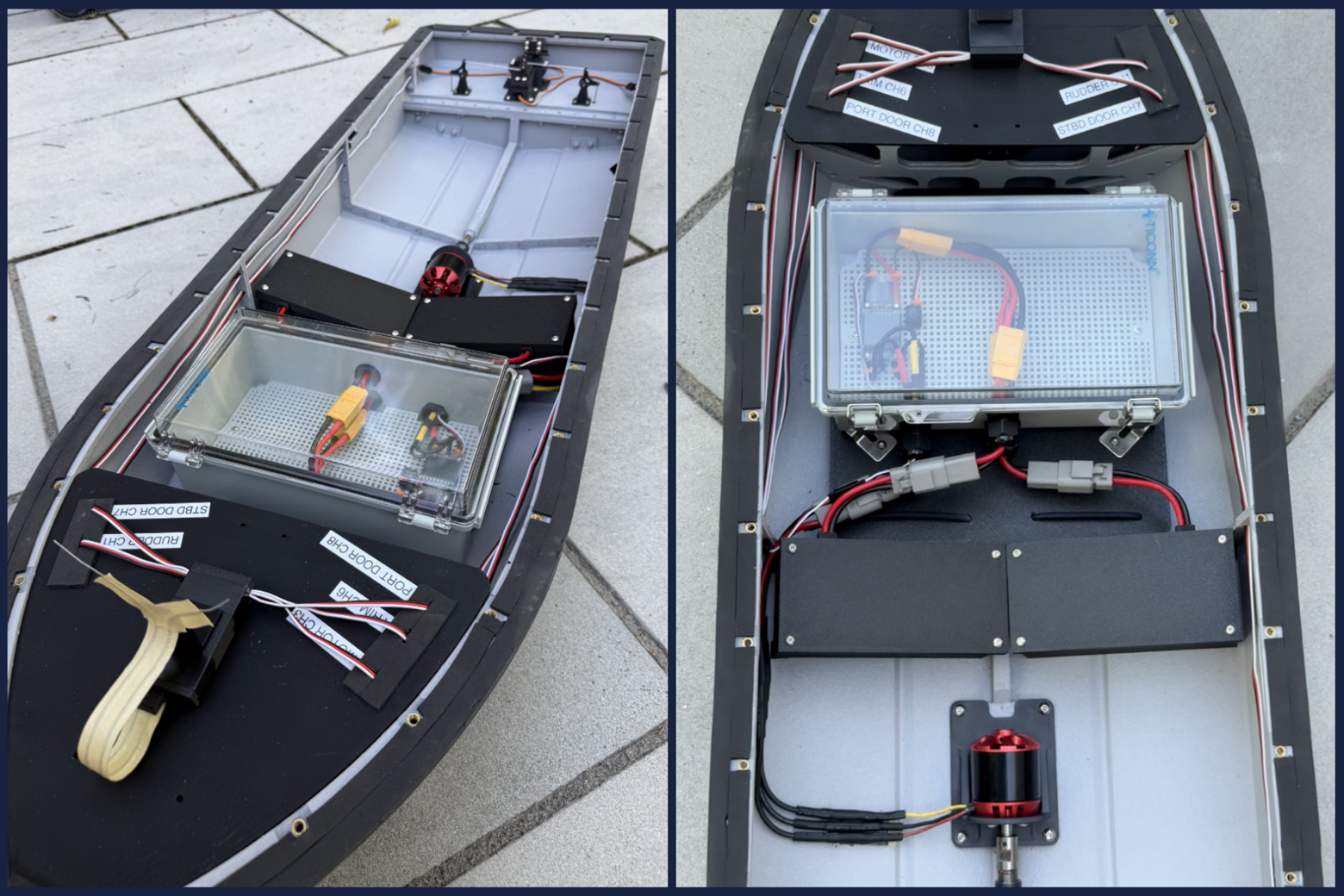
Internal hardware and electronics.
All electronics have multiple layers of watrproofing to ensure reliability.
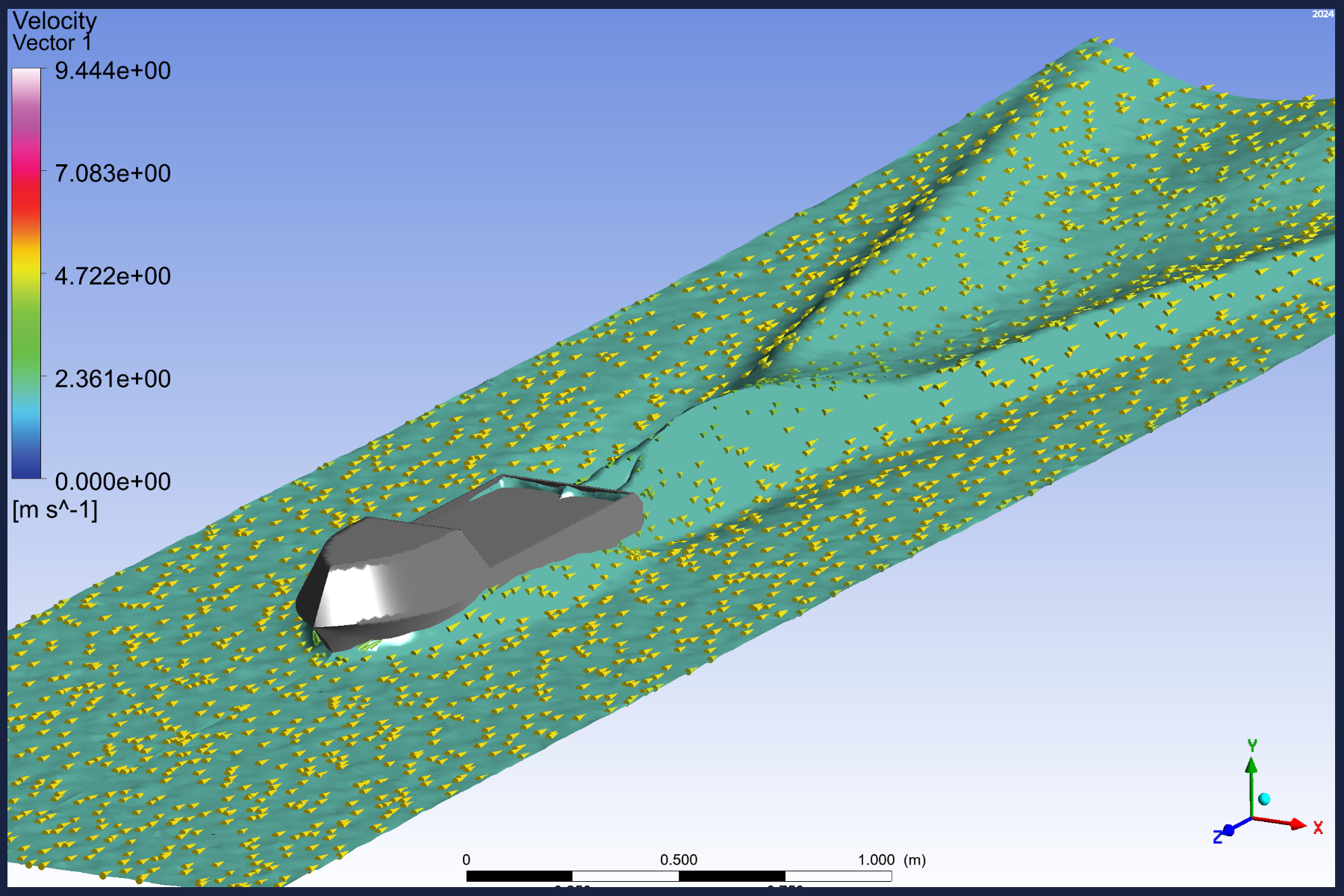
Multiphase CFD simulation in Ansys to analyze wake.
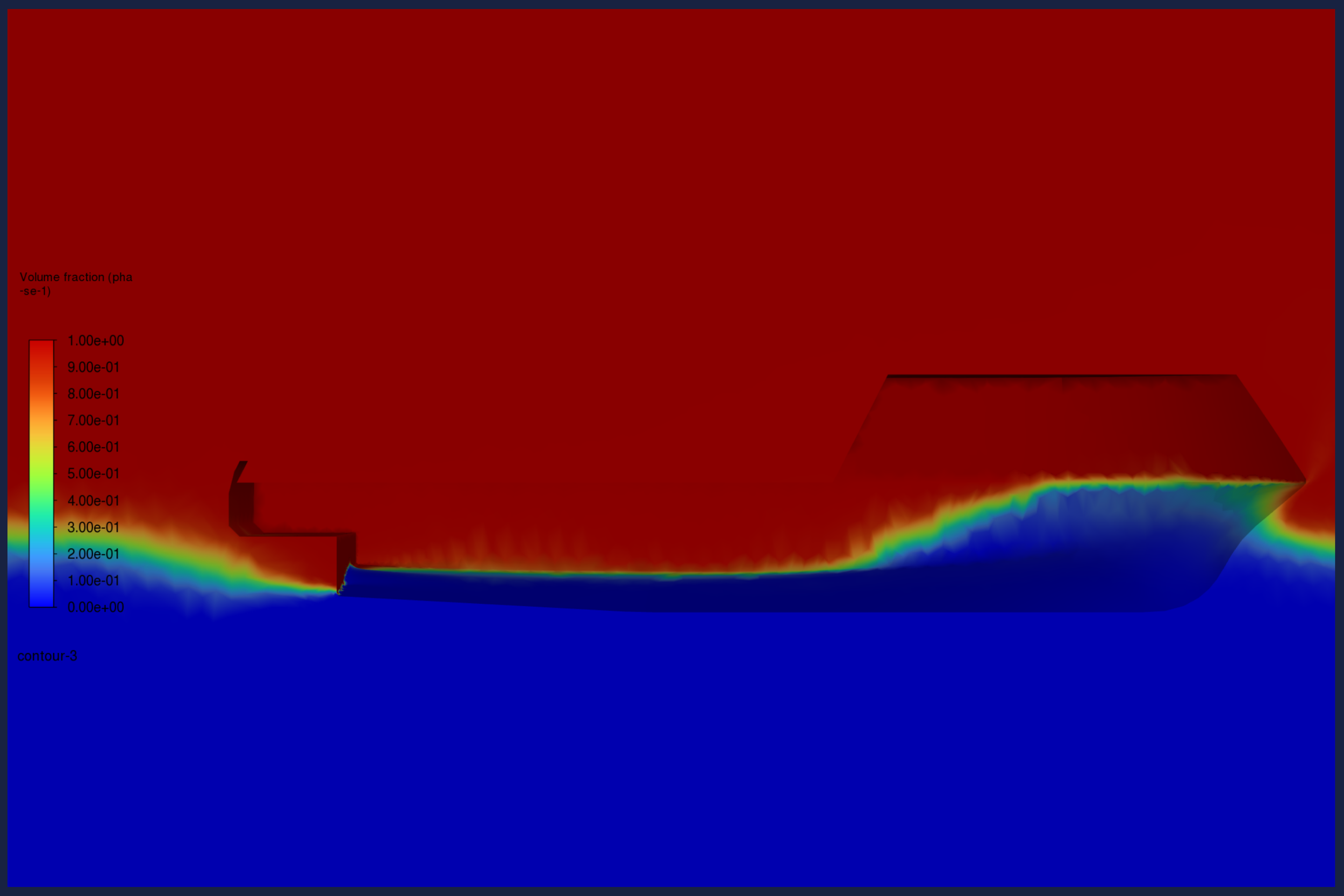
Multiphase CFD simulation in Ansys to analyze free surface profile.
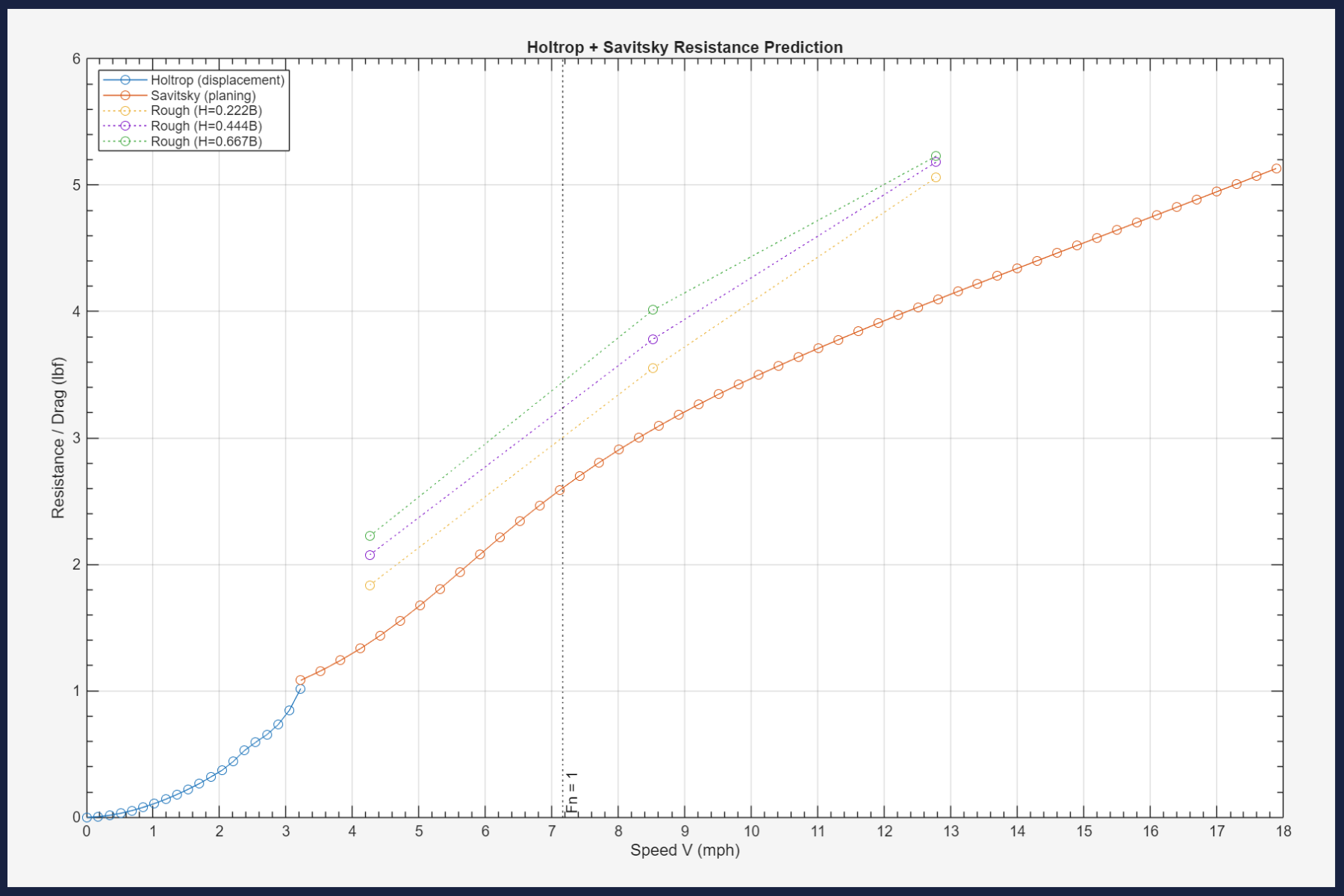
Holtrop & Mennen and Savitsky resistance calculations using MATLAB.
These calculations were used to approximate the resistance on the hull while in displacement, transition, and planing mode.
The results determine appropriate propeller and motor requirements.

Animation of hatch mechanism for the UAV bay.

Animation of trim tabs which ensure stability at high speed.

MOSAIC’s hull following fiberglass and fairing filler construction.